Commercial Waste Disposal in London
Reliable waste services for London businesses
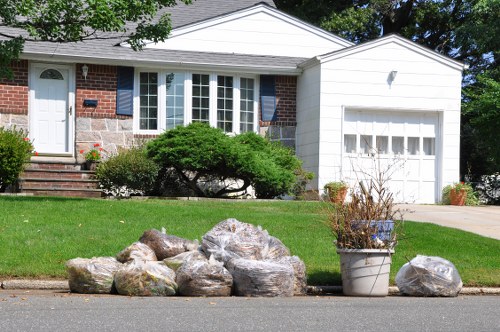
Running a business in the capital means dealing with space constraints, fast turnaround times, shared access, and a constant need to keep premises clean, safe, and presentable. Whether you manage an office in the City, a restaurant in Shoreditch, a retail unit in Camden, a clinic in Kensington, or a mixed-use property in Southwark, commercial waste disposal in London needs to be efficient, compliant, and flexible enough to fit around the way your business actually operates.
Many local businesses are looking for more than a basic bin collection. They need a dependable service that understands London’s traffic, loading restrictions, permit-only streets, basement access, narrow service yards, and the realities of busy commercial buildings. That is why choosing a local team matters. A well-planned commercial waste solution helps keep your site tidy, supports hygiene and safety, and reduces the disruption that waste can cause to staff, customers, and contractors.
From daily general waste collections to specialist handling for bulky items, cardboard, food waste, or mixed recyclables, the right service should fit your schedule and your premises. If you are comparing providers or preparing to switch from an unreliable collection, this page explains what commercial waste disposal covers, what affects the service, and what to expect when booking a local team in London.
Why London businesses need a local waste partner

Commercial sites across London face pressures that are different from many other cities. Deliveries can be tightly timed, parking can be limited, and waste often has to be moved through shared entrances, internal corridors, or back-of-house areas. For landlords, facilities managers, shop owners, hospitality businesses, and office administrators, waste collection must work around those constraints rather than adding to them.
A local provider can usually respond more easily to the day-to-day realities of operating in areas such as Westminster, Islington, Hackney, Tower Hamlets, Wandsworth, Lambeth, Brent, Ealing, and Greenwich. That means better planning for collection access, a more practical understanding of local streets and loading bays, and a service that can be tailored to commercial property types ranging from high-rise offices to townhouse conversions and industrial estates.
Commercial waste disposal in London is not only about removing rubbish. It is about managing waste responsibly, separating streams where possible, supporting compliance, and making sure your premises remain professional and workable. When collections are missed or bins overflow, the impact is immediate: odours, pests, unhappy customers, and avoidable pressure on your team. A solid local service helps prevent those problems before they start.
What commercial waste disposal includes
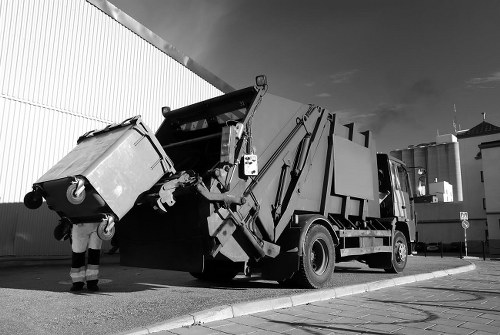
Businesses generate different waste types depending on what they do, and a proper commercial waste service should recognise that. An office in Canary Wharf will not produce the same waste as a café in Clapham, a hotel near Paddington, or a warehouse on the edge of Wembley. The collection plan should reflect the volume, composition, and timing of your waste streams.
Typical commercial waste disposal services in London may include general waste, dry mixed recycling, cardboard and packaging, food waste, office clear-outs, bulky waste, and some types of specialist non-hazardous commercial rubbish. For many businesses, the most helpful service is one that combines regular collections with a clear sorting approach, so recyclable materials are not mixed in with residual waste.
It is also common for commercial customers to need support with one-off removals. For example, if you are refurbishing an office, replacing furniture, clearing stock, or moving out of a premises, a flexible collection can remove accumulated waste quickly without disrupting building access or trading hours. The right provider should be able to work around your operational needs rather than asking you to stop the business to suit the waste collection.
Common waste streams for London businesses
Different sectors create different types of waste, and understanding those streams helps you organise collections more efficiently. Some of the most common include:
- General commercial waste from everyday operations, such as non-recyclable packaging, contaminated items, and mixed refuse.
- Cardboard and paper from retail stock, delivery boxes, office printing, and packaging materials.
- Food waste from cafés, restaurants, canteens, hotels, and catering facilities.
- Dry mixed recycling for businesses that separate suitable recyclables from residual waste.
- Bulky items such as shelving, office chairs, desks, displays, and broken equipment.
- Clear-out waste from refurbishments, relocations, and end-of-lease works.
Some premises also have additional considerations such as bin storage limitations, shared waste rooms, or collection points in underground car parks. In places like Central London, the West End, or dense parts of East London, waste handling often has to be coordinated with building management to avoid congestion or access issues. A practical local service takes those factors into account from the start.
Tip: If your business is generating more waste than expected, it is often worth reviewing the mix rather than just increasing collections. Better separation can reduce contamination, improve site cleanliness, and make collections more manageable.
How the service works

The process for arranging commercial waste disposal in London is usually straightforward, but good planning at the start makes a big difference. A suitable provider will ask about the type of business you run, the size of your premises, how often waste is produced, and where collections can safely take place. This helps ensure the service is workable from day one.
In many cases, the service begins with an assessment of your waste needs. That may involve looking at bin sizes, collection frequency, access arrangements, and the kinds of material being produced. For some customers, the most effective setup is a regular recurring collection. For others, especially those with seasonal trade or short-term projects, a flexible on-demand arrangement is more suitable.
Once the collection plan is agreed, the team will usually fit the service around your operating hours where possible. This is especially useful for hospitality venues, office buildings with reception areas, schools, health practices, and retail businesses that cannot afford disruption during trading time. A dependable service should also provide clear expectations about bin presentation, access routes, and waste separation so collections run smoothly.
Typical steps from enquiry to collection
Although every business is different, the process often follows these steps:
- You explain the type of waste your business produces and the location of the premises.
- The collection requirements are reviewed, including frequency, access, and waste volume.
- A suitable service plan is arranged for regular or one-off collections.
- Bins, containers, or collection arrangements are confirmed for your site.
- Collections are carried out according to the agreed schedule.
- Any changes to waste volume, trading patterns, or site access can be reviewed over time.
This approach helps avoid the common problems that businesses encounter when collections are too small, too infrequent, or not aligned with the way the premises actually function. In a city as busy as London, a practical setup can save time and reduce stress for your staff.
Need a service that fits a busy site? Request a free quote and book a collection schedule that works for your premises.
Who we help across London

Commercial waste disposal in London supports a wide range of customers, from small independent businesses to large multi-site operators. Because the city is so varied, waste needs can differ significantly from one area to another. A shop in Notting Hill may need discreet collections behind a narrow frontage, while a logistics unit in Acton may need frequent removal of heavier packaging waste. The service should adapt to the setting, not the other way around.
We regularly see demand from offices, restaurants, bars, cafés, retail stores, hotels, gyms, clinics, salons, co-working spaces, estate managers, contractors, and light industrial premises. Residential blocks with commercial units on the ground floor also need a reliable system, especially where shared bins, communal access, and building rules have to be respected.
Local knowledge is especially useful in areas where access is more complicated. For example, collection planning may need to account for one-way streets, timed parking restrictions, basement waste rooms, or service entrances that are only accessible at certain hours. A team experienced in London commercial waste disposal can work more efficiently in places such as the City, Soho, Brixton, Holborn, Stratford, Richmond, Hammersmith, Lewisham, and beyond.
Why local relevance matters
London businesses often share the same challenge: limited space. Bins may need to be stored indoors or in tight yards, and loading can be more difficult in older buildings or converted properties. A local provider is better placed to understand these constraints because they deal with them every day. That helps with realistic scheduling and fewer collection headaches.
There is also a trust factor. When you work with a company that understands local business districts, transport links, and the way different neighbourhoods operate, you are more likely to receive practical advice rather than generic suggestions. That matters whether you are running a café in Peckham, a law office near Temple, or a showroom in Chelsea.
The most helpful commercial waste service is one that feels simple for your team and invisible to your customers. Waste should be collected efficiently, quietly, and with minimal interruption to your operation.
Benefits of choosing a professional commercial waste service
Businesses usually choose a dedicated waste service because it solves multiple problems at once. A clean, organised site supports better day-to-day operations, while regular collection helps you avoid waste build-up and keep your premises presentable. For customer-facing businesses, that first impression matters. For back-of-house teams, it can mean less time spent chasing bin space or dealing with overfilled containers.
Another major benefit is compliance. Commercial waste has to be handled correctly, and it is important to work with a provider that understands proper waste transfer, responsible disposal, and separation practices. While every business has its own responsibilities, using a professional service gives you a much better structure than relying on ad hoc removal.
Additional advantages can include:
- More efficient use of limited storage space
- Cleaner shared areas and loading zones
- Better waste segregation and recycling opportunities
- Fewer collections missed due to unclear procedures
- Reduced disruption for staff and customers
- Flexible arrangements for seasonal or changing trade
For many London businesses, the most valuable benefit is peace of mind. Once a proper arrangement is in place, waste becomes one less thing to worry about during a busy working week.
Commercial properties and local access challenges
London’s building stock is diverse, and that creates practical challenges for waste collection. Modern office towers may have secure loading docks and managed waste rooms, while older terraces and converted townhouses may only allow access through rear alleys, gated courtyards, or narrow internal passages. Hospitality venues may store waste in shared yards, and retail units often operate from compact frontages with limited space behind the counter.
Because of this, collections need to be planned with access in mind. Your provider should ask about steps, lifts, basement routes, loading times, and any building rules. If the site is in a controlled parking zone or on a busy high street, they should also consider where vehicles can safely stop without causing unnecessary congestion.
Common London access issues include:
- Restricted parking and loading windows
- Shared entrances and concierge-controlled access
- Basement waste rooms and underground car parks
- Pedestrianised streets or busy retail frontages
- Narrow alleys, service lanes, and courtyard access
- Multi-tenant buildings with shared bin storage
A service built around these realities is far more practical than a one-size-fits-all arrangement. That is especially important where there are customers on site throughout the day or where waste must be moved discreetly outside business hours.
What affects pricing for commercial waste disposal in London?
While it is not appropriate to assume fixed prices without understanding the site, there are several factors that typically influence the cost of commercial waste disposal in London. These include the amount of waste generated, how often collections are needed, the type of waste being removed, and how accessible the premises are for collection vehicles and crews.
Other factors may include the number of containers required, whether the waste is mixed or separated, if there are recurring contamination issues, and whether the service is a regular contract or a one-off clearance. Sites that are harder to access, involve longer handling times, or require collections at specific times may also need more planning.
Pricing is commonly affected by:
- Waste volume and collection frequency
- General waste versus recyclable materials
- One-off clearances versus scheduled collections
- Access complexity and handling time
- Container size and number of bins
- Any special site arrangements or building restrictions
If you are comparing providers, it is usually sensible to ask what the service includes, how the waste is handled, and whether the plan can be adjusted if your business changes. A clear, well-explained quote is often more useful than a low headline figure that does not reflect the real needs of your premises.
How to prepare for a collection
Good preparation helps collections run smoothly and reduces the chance of delays. Most businesses do not need to do anything complicated, but a few simple steps can make a real difference, especially on busy London streets or in shared commercial buildings.
Before the first collection, it helps to check where waste should be placed, when bins should be presented, and whether anyone needs to open gates, doors, or service access points. If you are in a managed building, it is worth informing reception, facilities staff, or the landlord’s team so the collection process does not conflict with building rules.
Preparation checklist
- Confirm the waste storage area and collection point
- Separate recyclable materials where possible
- Make sure bins are not blocked by deliveries or stock
- Keep access routes clear of obstacles
- Inform building management if shared access is involved
- Check collection times against trading hours or visitor peaks
- Report any site-specific instructions that could help the crew
Small actions like these can save time and help collections happen without interrupting your business.
Why businesses switch providers
Many customers begin looking for a new commercial waste solution because they are experiencing recurring issues with their current service. The most common reasons include missed collections, poor communication, waste not being handled in the right way, or a service that no longer suits the business as it grows.
Some businesses also switch after refurbishing their premises, expanding into a larger unit, or moving from a single-site setup to multiple branches across London. In those cases, a provider that can scale the service and offer practical advice is particularly valuable. If your waste output has changed, your old arrangement may no longer be the best fit.
Other customers simply want a cleaner, more organised arrangement. They may be tired of overflowing bins, awkward collection times, or arrangements that create friction with neighbours, landlords, or building managers. A local commercial waste team can help replace that uncertainty with a simpler routine.
Areas covered across London
Commercial waste disposal is relevant across the whole city, from central business districts to outer borough commercial centres. The practical needs may differ, but the goal is the same: a dependable collection service that suits the site and keeps operations moving.
Areas commonly covered include Central London, North London, East London, South London, and West London, along with surrounding business districts and mixed commercial zones. That can include areas such as Westminster, Camden, Hackney, Islington, Hammersmith, Fulham, Kensington, Chelsea, Southwark, Lambeth, Tower Hamlets, Greenwich, Waltham Forest, Ealing, Brent, Richmond, Merton, and many nearby locations.
Whether your premises are in a busy town centre, a retail parade, an office block, or a light industrial estate, the service should be built around your specific location and access conditions. If you are unsure whether your area is covered, it is sensible to request a quote and explain your site details so the provider can confirm the most practical arrangement.
What to look for when choosing a provider
Choosing the right commercial waste partner is not only about waste removal itself. You want a company that understands how London businesses operate and can provide a service that feels dependable over time. That means looking at service flexibility, clarity of arrangements, local experience, and how well the provider understands your property type.
For example, if you run a restaurant in a tight street with no easy parking, it helps to have a team that knows how to plan around service access. If you manage office space in a multi-tenant building, you need collections that respect other occupants and building rules. And if your business has seasonal surges, you may need a provider who can adapt without making the process complicated.
Useful questions to ask before booking
- Can the service fit our collection times and access arrangements?
- What types of waste can be collected?
- Can collections be adjusted if our waste volume changes?
- How is recycling handled for our site?
- What information do you need about our building or loading area?
- Can you support both regular collections and one-off clearances?
A good answer to these questions should give you confidence that the service will work in the real world, not just on paper.
FAQs about commercial waste disposal in London
Q: What counts as commercial waste?
A: Commercial waste includes rubbish generated by businesses, landlords, public buildings, and other non-domestic premises. This can include general waste, packaging, recyclables, food waste, and bulky items created through day-to-day operations or clear-outs.
Q: Do I need regular collections, or can I book one-off removal?
A: Both options are common. Regular collections are useful for ongoing waste, while one-off removals are often better for office moves, refurbishments, stock changes, or end-of-lease clearances.
Q: Can collections work in tight London streets?
A: Yes, but access details matter. A good provider will want to know about parking, loading, gates, basement storage, and any restrictions so they can plan a workable collection.
Q: What if our waste volume changes through the year?
A: That is common, especially in hospitality, retail, and event-related businesses. It is best to speak with the provider about adjusting collection frequency or container size if your needs change.
Q: Do you help with mixed commercial sites?
A: Yes, many London properties have a mix of residential and commercial use. The key is to separate the waste arrangements correctly and respect shared access and building rules.
Q: How do I get started?
A: Start by outlining your business type, premises location, access conditions, and waste volume. Then request a free quote and ask for a service plan that suits your site.
Book your commercial waste service
If your business needs a dependable, local solution for waste removal, now is the right time to put a proper arrangement in place. The right commercial waste disposal in London service should make your site easier to manage, reduce clutter, and support the day-to-day running of your business without unnecessary disruption.
Whether you need scheduled collections, a one-off clear-out, or a better system for managing recycling and general waste, a local team can help you find a practical setup. This is especially valuable in London, where access, timing, and space all need careful planning.
Contact us today to discuss your requirements, request a free quote, or book your service now. A simple conversation about your premises and waste needs is often the fastest way to get started with a collection plan that works for your business.