Rubbish Removal in London
When you need rubbish removal in London, you usually need it sorted quickly, safely, and without creating more hassle than the mess you are trying to clear. Whether it is a flat in Camden, a townhouse in Islington, a shop unit in Shepherd’s Bush, a family home in Greenwich, or an office in Canary Wharf, waste can build up faster than expected. Old furniture, broken appliances, renovation debris, garden cuttings, and end-of-tenancy clutter all take up space and can get in the way of daily life. A local removal service is designed to make that problem disappear with minimum disruption.
London brings its own challenges. Tight streets, limited parking, controlled parking zones, basement flats, top-floor walk-ups, busy high streets, shared access, and time-sensitive building rules all affect how waste is removed. That is why local knowledge matters. A team that regularly works across the capital understands how to plan collection times, navigate access restrictions, and remove items efficiently from properties of all shapes and sizes. If you are looking for a practical, reliable way to clear unwanted waste, book your service now and take the pressure off your day.
This page is written for real London customers who want clear information before they choose a service. It explains what rubbish removal can include, how the process works, what affects pricing, how to prepare, which areas are covered, and the questions people commonly ask before they request a quote. If you are comparing options for household waste removal, office clearance, builders waste collection, or same-day junk removal, the sections below will help you decide what fits your needs best.
Why Local Rubbish Removal Matters in London

London is a city of contrasts. A waste collection job in a narrow terrace street in Hackney is very different from clearing an apartment block in Battersea, a retail backroom in Stratford, or a mews property in Kensington. Local rubbish removal services are built around those differences. Instead of treating every job the same, a good team will consider loading access, staircases, lift availability, estate rules, traffic flow, and the need to work quickly to avoid disrupting neighbours or businesses.
There are also practical reasons to choose a local company rather than trying to handle everything yourself. Hiring a van, lifting heavy furniture, sorting disposal rules, and making multiple trips to a reuse or disposal site can take a whole day or more. In many cases, the cost of lost time, fuel, parking fees, and physical effort makes self-removal less appealing than it first seems. A professional service helps simplify the process and can often collect everything in one visit.
For busy households, landlords, property managers, builders, and local businesses, convenience is often the biggest benefit. You can get clutter removed without having to arrange labour, transport, or disposal logistics. That means less time off work, less strain on your team, and less stress overall. It also means you can reclaim usable space sooner, whether you are preparing a property for sale, clearing after a tenancy, or getting a workplace back to normal after refurbishment.
What Our Rubbish Removal Service Can Include

Rubbish removal services in London can cover a wide range of items and property types. In many cases, customers are not dealing with one small bag of waste, but with a mix of bulky, awkward, and difficult-to-lift materials. A flexible local team can often remove everything in one go, saving you from arranging several different collection methods.
Typical items include unwanted furniture such as sofas, beds, wardrobes, tables, chairs, and shelving. It can also include white goods and appliances like fridges, freezers, washing machines, tumble dryers, dishwashers, microwaves, and smaller electrical items. For households, this is especially useful during a move, renovation, probate clearance, or spring clean. For businesses, it can help with office furniture disposal, archived materials, display fittings, packaging waste, and old equipment.
You may also need builders waste removal after DIY work or a construction project. This can include timber, plasterboard, tiles, broken fixtures, soil, rubble, and general renovation debris. Garden waste is another common request, especially from properties with small outdoor spaces where waste piles up quickly after trimming hedges, digging borders, or clearing overgrown corners. Some services can also handle mixed loads, which is helpful when a job produces a variety of different materials.
Common rubbish removal jobs across London

London customers request waste clearance for many reasons. Some are practical, some are urgent, and some are tied to major changes in property use or family life. The most common jobs often include end-of-tenancy clearances, loft and basement clean-outs, garage clearances, post-renovation waste, shop refits, and office decluttering. In high-density areas, even a small amount of waste can make a property feel cramped and difficult to use, so regular collection can make a big difference.
Households often call when they need to clear the aftermath of a move, a bereavement, or a long-overdue tidy-up. Landlords and letting agents may need a fast turnaround between tenants, especially where a property has been left with furniture or general rubbish behind. Commercial customers often need a service that can work around opening hours, loading bay restrictions, and the need to keep business disruption to a minimum. A local team can usually plan for that kind of flexibility.
Many Londoners also look for help with bulk waste collection because council collection schedules, item limits, or access conditions do not always fit their circumstances. In those moments, having a service that can collect at a suitable time and remove multiple items at once is a practical alternative. It helps when you want an efficient, straightforward clearance without waiting for separate bookings or having to move heavy items yourself.
Property types we regularly help with
- Flats, apartments, and maisonettes
- Terraced homes and townhouses
- Basement and loft properties
- Student accommodation
- Retail units and restaurants
- Offices, studios, and co-working spaces
- Workshops, storage rooms, and light industrial units
How Rubbish Removal in London Works

The process is designed to be simple. Most customers start by describing the type of waste, the amount, the location, and any access issues. This helps the team understand whether the job involves a few bulky items, a full property clearance, or a mixed load that needs extra time. A quote can then be provided based on what needs removing and how the collection needs to be carried out.
Once booked, the team arrives at the agreed time and begins loading the items. In many cases, you do not need to move everything to the kerb. The purpose of a proper removal service is to take the strain away from you, so items are commonly collected from inside the property, from gardens, garages, basements, or commercial premises. If there are items you want kept, it is helpful to separate them beforehand so there is no confusion on the day.
After loading, the waste is taken away for sorting and disposal in line with the type of material involved. Where possible, items may be separated for reuse, recycling, or responsible processing. This is especially useful for larger clearances because it helps reduce the amount going to disposal and makes the process more environmentally sensible. For many customers, the biggest relief is simply seeing the space cleared and ready to use again.
What makes the process easier for London properties
In many parts of London, quick access is limited. A service that understands how to work around stairwells, shared entrances, residents’ parking bays, and narrow roads can save time on the day. That local experience is valuable whether you are in Brixton, Hammersmith, Dalston, Wimbledon, or the City. It also helps if the team knows how to manage collections in busy areas where timing and vehicle positioning matter.
What Is Included in a Typical Collection
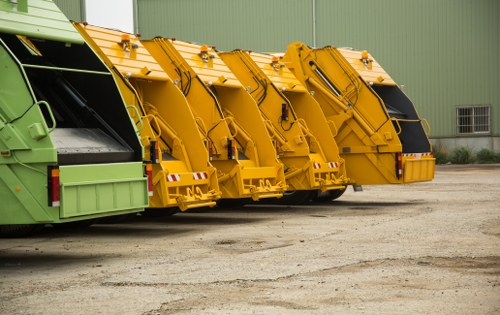
Customers often want to know what they actually get when they request rubbish removal in London. While every job is different, a typical service is usually focused on keeping the process as easy and transparent as possible. It commonly includes arrival at the agreed time, loading of the specified waste, transport away from the site, and responsible disposal arrangements after collection.
In many cases, the team will help with heavy lifting, awkward items, and moving waste from different parts of the property to the vehicle. That can be particularly important in London, where many homes have multiple floors or difficult access. If there are items in a loft, garden, basement, or rear alley, a local crew can often manage the work without requiring you to organise additional help.
Depending on the type of service booked, collection can include:
- Single bulky item removal
- Multiple household items
- Mixed general waste loads
- Office and commercial clearances
- Builders and renovation waste
- Garden and outdoor waste
- Garage, loft, shed, and basement clearances
If your job involves sensitive items, restricted access, or a large volume of waste, it is worth sharing those details early. That allows the team to bring the right equipment and allow enough time for the clearance. If you are not sure whether your waste is suitable, a free quote request or a quick pre-booking check can help you get clarity before committing.
Residential Rubbish Removal for London Homes
London homes come in all forms, and each has its own waste removal challenges. A family house in Ealing may have years of accumulated items in the loft or shed. A flat in Southwark may need a sofa and wardrobe taken down several flights of stairs. A new homeowner in Crouch End may want builder’s waste removed after decorating. In each case, the aim is the same: clear the clutter without disrupting the household.
Residential customers often need a service that works around school runs, shift patterns, and busy family schedules. It can be particularly useful when you are clearing before a move, sorting out inherited items, or making space after a redesign of the home. A professional collection can reduce the physical strain of lifting and carrying, especially when items are large, awkward, or no longer safe to move alone.
Another common reason people book domestic waste removal is simply to regain control of a room. Spare bedrooms often become storage areas. Hallways can become blocked by broken furniture or boxes. Gardens can fill with trimmings, old pots, and unused outdoor furniture. Once these items are removed, the property becomes easier to use, clean, and enjoy. For many homeowners and tenants, that improvement is immediate and noticeable.
Examples of domestic clearances
- End-of-tenancy rubbish and leftover belongings
- Loft, attic, and storage room clean-outs
- Bedroom furniture and mattress removal
- Kitchen strip-out waste after refit work
- Garden waste and outdoor clutter
- Garage and shed clearances
- Post-move household junk removal
Commercial Rubbish Removal for London Businesses
Businesses in London often need waste removed quickly and discreetly. Offices may be replacing desks, chairs, and filing cabinets. Restaurants and cafes may need packaging, old fixtures, or refurbishment debris taken away. Shops may be refurbishing a unit and need clearance before new stock arrives. In these situations, speed matters, but so does reliability. Any delay can affect opening hours, staff workflow, and customer experience.
A commercial clearance service is especially useful when a business does not have the time or manpower to manage bulky waste itself. It can help keep work areas safe by removing trip hazards, unwanted materials, and obsolete equipment. For offices, it can also support a move or downsizing project by clearing furniture and general junk in stages rather than all at once, which can be easier to manage in a busy building.
Local London knowledge helps here too. Loading restrictions, service entrances, estate access rules, and peak traffic can all affect timing. A team that works across central and outer London is better placed to arrive prepared and keep the job moving. If you operate in areas like Shoreditch, Holborn, Paddington, Croydon, or Wembley, a coordinated collection can be arranged with the building and business needs in mind.
Businesses that often use rubbish removal
- Offices and studios
- Retail shops and showrooms
- Hospitality venues
- Property managers and landlords
- Builders, decorators, and tradespeople
- Schools, community premises, and managed buildings
How to Prepare for Your Collection
Preparing well can make the service faster and more straightforward. You do not usually need to do a lot, but a few simple steps can help avoid confusion and save time on the day. The more accurate the information you provide beforehand, the easier it is for the team to plan the right vehicle, crew, and collection time.
Start by identifying exactly what needs to go. If you have a mixture of items, group them by room or by type if possible. Make sure anything you want to keep is set aside clearly. If access is difficult, such as through a narrow staircase or shared corridor, let the team know in advance so they can plan accordingly. For flats, it may also help to check building rules about loading, lift use, or collection times.
It is also useful to think about parking. In many parts of London, parking can be the biggest practical issue. If a bay, permit, or loading space is needed, let the service know ahead of time. That way, the collection can be arranged more smoothly and there is less chance of delay. Good preparation helps the job stay efficient and can reduce stress for everyone involved.
Simple preparation checklist
- Separate items you want to keep from items to remove
- Check if anything is heavy, fragile, or awkward to move
- Tell the team about stairs, lifts, or access restrictions
- Note any parking or permit issues
- Let the property manager or neighbours know if needed
- Make sure pets and children are kept clear during loading
Pricing Factors for Rubbish Removal in London
People often want to know what affects the cost of rubbish removal. While exact prices vary, the main factors are usually the amount of waste, the type of waste, the labour involved, and the ease of access. A small single-item collection is very different from clearing a full flat or a commercial premises. Likewise, waste that is easy to carry from a ground-floor property will usually be less involved than items located in a basement or top-floor apartment.
The nature of the waste also matters. Mixed loads, heavy building materials, and difficult-to-handle items may require more time or special handling. Access can play a major role too. If the team has to navigate narrow stairs, long corridors, restricted parking, or busy streets, the work may be more involved than a simple driveway collection. That is why accurate descriptions help produce a more useful quote.
When comparing services, focus on clarity and suitability rather than chasing the cheapest option alone. A proper rubbish removal provider should explain what is included and what affects the cost, so you know where you stand. If you are unsure how much waste you have, ask for a quote based on photos or a detailed description. That is often the fastest way to get a realistic estimate before booking.
Things that can affect pricing
- Volume of waste to be removed
- Type of waste and loading difficulty
- Number of staff needed
- Access, stairs, and parking conditions
- Urgency or same-day request
- Time required for the job
Why Choose a London-Based Waste Removal Team
Choosing a local team is not just about proximity; it is about practical knowledge. London properties and streets create conditions that outsiders may not anticipate. A team that already works across the city understands estate layouts, borough parking rules, typical access issues, and the realities of moving bulky items through busy neighbourhoods. That experience helps the service run more smoothly from start to finish.
Local teams are also better placed to respond to urgent requests. If you need a fast clearance before a handover, a delivery, a letting inspection, or a renovation start date, a London-based service is often more flexible. That can be the difference between a stressful delay and a clean, ready-to-use space. It also means communication tends to be more straightforward because the service is built around local work rather than occasional long-distance visits.
For many customers, the best reason to choose local is peace of mind. You want a team that understands the area, turns up prepared, and removes the waste without unnecessary complications. Whether you are in North London, South London, East London, West London, or central boroughs, local knowledge helps shape a better experience.
Areas Covered Across London
A good rubbish removal service should be able to cover a wide range of London neighbourhoods, from central districts to outer boroughs. Many customers look for help in areas such as Westminster, Camden, Kensington and Chelsea, Hammersmith and Fulham, Tower Hamlets, Hackney, Southwark, Lambeth, Wandsworth, Richmond, Brent, Ealing, Haringey, Barnet, Lewisham, Greenwich, Newham, and beyond. Coverage also often extends to surrounding areas where access and timing still fit a standard local collection.
London is large enough that no two areas feel exactly the same. A collection in a mansion block near the river may involve different access considerations from a house on a suburban road or a warehouse conversion in an industrial estate. That is why it helps to work with a provider that can adapt to each location rather than using a one-size-fits-all approach. The more familiar the team is with local conditions, the smoother the collection usually becomes.
If your area is not listed specifically, it is still worth asking. Many services work across a broad London footprint and can confirm whether your postcode is covered. Request a free quote and include your location, the kind of waste involved, and any access notes so you can get the most useful response.
Typical local scenarios
- Flat clearance in a block with lift restrictions
- Household waste removal from a terraced home
- Office clearance in a busy commercial district
- Builders waste removal from a renovation project
- Garden waste collection from a rear-access property
Frequently Asked Questions
Q: Do I need to move the rubbish outside before collection?
Usually not. Many customers prefer a service that removes items from inside the property, garden, garage, or workplace. If access is particularly difficult, it is best to mention that in advance.
Q: Can you collect mixed waste in one visit?
In many cases, yes. Mixed loads are common in London, especially after clearances, renovations, and moves. Let the team know what kind of items you have so they can advise properly.
Q: What if my property has no parking nearby?
This is a common London issue. A local team may be able to plan around loading restrictions, nearby bays, or timed access. The key is to explain the situation before the booking is confirmed.
Q: Is rubbish removal suitable for landlords and estate agents?
Yes. It is often used for end-of-tenancy clearances, abandoned items, and preparing properties for new occupants. It can save time between tenancies and help keep the handover process on track.
Q: Can businesses book collections outside regular hours?
Some commercial jobs need flexible timing to reduce disruption. If you have opening hours or building rules to work around, ask when arranging the service.
Q: How soon can collection happen?
Availability varies, but urgent or same-day requests may sometimes be possible depending on workload and location. The best approach is to request a quote as early as you can and share your timeline clearly.
Q: What should I do if I am not sure how much rubbish I have?
Provide photos or a room-by-room description if possible. That helps estimate the size of the job and avoids surprises on the day.
Choosing the Right Service for Your Situation
Not every rubbish job is the same, so it helps to match the service to the problem you are trying to solve. A small collection of broken household items may only need a quick visit. A full house clearance, on the other hand, may require more planning, extra labour, and more time on site. If you are dealing with commercial waste, you may also need a service that can work discreetly and at a convenient time.
Think about three main questions before you book: what needs to be removed, where it is located, and how quickly you need it gone. Those answers will help you choose a service that fits. If you are planning refurbishment, moving house, or preparing a rental property, arranging removal early can prevent waste from slowing down the rest of the project.
It is also sensible to choose a provider that communicates clearly. You want to know what is included, whether access details matter, and how the collection will be handled. A straightforward approach builds trust and makes the whole experience easier. Contact us today if you are ready to clear space and want a practical solution tailored to London conditions.
Final Thoughts on Rubbish Removal in London
Living and working in London means dealing with limited space, busy schedules, and properties that are not always easy to access. That is exactly why a professional waste clearance service can be so useful. It gives households and businesses a simple way to remove unwanted items, free up valuable space, and keep projects moving without unnecessary strain.
From compact flats to larger homes, from offices to retail units, from garden clearances to builders waste, the right service can make a big difference. If you want a local team that understands London’s practical challenges and can manage the removal process from start to finish, now is the right time to take the next step. Book your service now or request a free quote to get started.
Whether you need a one-off pickup or a larger clearance, the goal is simple: make the process smooth, reliable, and suitable for your property. With the right support, you can turn a cluttered space into one that feels manageable again, without the burden of doing it all yourself.