Council Large Item Collection in London
If you need council large item collection in London, you are probably dealing with a bulky sofa, a mattress that has seen better days, an old wardrobe, broken white goods, or several items that simply will not fit into normal bins. For many London households and businesses, these items build up quickly after a move, a refurbishment, a clear-out, or a property handover. The good news is that there are practical ways to handle bulky waste removal without turning it into a stressful all-day project.
This service page is designed for real local customers who want a straightforward solution. Whether you live in a flat in Islington, a terraced house in Wandsworth, a converted building in Hackney, a maisonette in Lewisham, or manage an office near Canary Wharf, understanding how large item collection works can save time, effort, and unnecessary disruption. London properties are often tight on space, parking can be difficult, and lift access is not always available, so using a local team that understands these conditions makes a real difference.
Below, you will find clear information on what a large item collection usually includes, how the process works, what affects pricing, how to prepare, and why a London-based service can be the easier option for both residential and commercial customers. If you are ready to clear space and move forward, contact us today or request a free quote to get started.
What Council Large Item Collection in London Means

In practical terms, council large item collection in London refers to the removal of bulky household or commercial items that do not go out with regular refuse collections. Different boroughs handle these services in different ways, and the process can vary depending on local rules, booking availability, and the type of item you need removed. Some councils offer bulky waste appointments, while others use scheduled collection windows or require residents to book in advance.
These collections are often used for items that are too big, too heavy, or too awkward for standard waste services. Common examples include sofas, armchairs, mattresses, bed frames, wardrobes, dining tables, desks, broken appliances, and some types of garden furniture. In many London homes, especially flats and smaller properties, these items are difficult to move without help.
A local bulky item collection service is useful when you need a faster, more flexible option than waiting for a council slot alone. It can also help if you have multiple items, limited access, or a mixed load that needs careful handling. For people in busy boroughs with narrow streets and restricted parking, a team that knows London logistics can make the process much smoother.
Who Uses This Service?

Large item collection in London is used by a wide range of customers. The most common are homeowners, tenants, landlords, letting agents, estate managers, office managers, shop owners, and tradespeople who need bulky waste cleared from a property or site. Many customers book the service when they are moving out, replacing furniture, or preparing a property for sale or rent.
For households, the service is especially helpful during spring cleans, after a new sofa delivery, when replacing a mattress, or when clearing a spare room, loft, shed, or storage space. For landlords and agents, it can be an important part of void property turnaround, end-of-tenancy clearance, and post-checkout cleaning. For businesses, it helps remove old office chairs, filing cabinets, desks, display units, and other redundant fixtures.
London also has a high number of flats, conversions, and shared buildings where bulky waste is hard to move down stairs or through communal entrances. In these settings, it is often better to have experienced collectors handle the lifting and transport rather than trying to shift awkward items yourself. That is especially true if you live above ground floor level or in a property with tight hallways and limited lift access.
Common Items We Collect
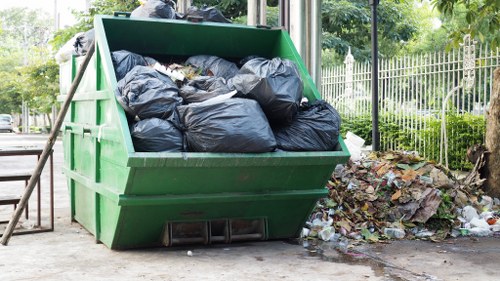
Large item collection can cover a broad range of bulky items, depending on the provider and the condition of the goods. In many cases, the service is arranged for single-item removals, multiple-item clearances, or part-load collections from homes and businesses. The key is that the items are too large for standard household waste removal.
Typical bulky items include:
- Sofas, corner sofas, sofa beds, recliners, and armchairs
- Mattresses, bed frames, divan bases, and headboards
- Wardrobes, chest of drawers, sideboards, cabinets, and shelving
- Dining tables, office desks, coffee tables, and kitchen tables
- Televisions, monitors, printers, and other large electrical items
- Fridges, freezers, washing machines, tumble dryers, dishwashers, and cookers
- Garden furniture, BBQs, and outdoor storage items
- Carpets, underlay, and selected refurbishment waste
Some items may need special handling because of size, weight, or material. Broken glass, water-damaged furniture, and items with sharp edges or contamination can require extra care. If you are unsure whether a particular item is suitable for collection, it is always best to describe it clearly when you request a quote. That helps avoid delays on the day and ensures the right vehicle and crew are sent.
How the Service Usually Works

The process for council large item collection in London is normally straightforward, but it can vary depending on whether you are using a council slot or an independent local collection team. In both cases, the aim is the same: remove the bulky items safely and with as little disruption as possible.
A typical service flow looks like this:
- You identify the items that need removing.
- You provide a description, quantity, and access details.
- You receive a quote or booking confirmation.
- A collection time is arranged, subject to availability.
- The team arrives, loads the items, and takes them away for responsible processing.
In London, access information matters more than many customers realise. A fifth-floor flat without a lift, a mews property with tight turning space, or a house on a road with red route restrictions may require a different approach than a suburban driveway collection. Sharing accurate details about parking, stair access, and item location makes the collection quicker and more efficient.
Some customers prefer an all-lifting-included service, where the team removes items from inside the property. Others may only need kerbside collection, where items are left in an agreed external location. If you are comparing options, check what is included so you know exactly how much help you will receive on the day.
Why London Properties Benefit from a Local Collection Team

London is not a one-size-fits-all city. The boroughs, road layouts, housing stock, parking restrictions, and access conditions vary considerably from place to place. A local collection team understands this and can plan accordingly. That is one of the main reasons people choose a London service instead of trying to manage a bulky item removal themselves.
Here are some of the main local advantages:
- Better understanding of access challenges in flats, mansion blocks, and converted properties
- More practical planning for parking in controlled parking zones and busy residential streets
- Faster response for short-notice clearances and time-sensitive removals
- Local route knowledge to reduce delays in busy central and inner London areas
- Experience with varied property types, from period terraces to new-build apartments and commercial units
This local knowledge matters even more when items need to be carried through narrow stairwells, taken down service lifts, or removed from basement spaces, lofts, or rear outbuildings. In many London areas, it is not simply about lifting items into a vehicle. It is about planning the safest and most efficient way to remove them without causing damage to walls, floors, or communal areas.
If you are managing a busy household, a refurbishment schedule, or a commercial clearance, using a team familiar with London conditions can save time and reduce stress. Contact us today to discuss the kind of collection you need and request a free quote.
What Is Usually Included in a Bulky Item Collection?
Many customers want to know exactly what they are paying for. While inclusions can vary, a professional large item collection service often covers the key steps needed to move items away safely and efficiently. The goal is to give you a clear, convenient service rather than leaving you to do the hard work yourself.
Common inclusions may be:
- Arrival at the booked time window where possible
- Loading of bulky items into the collection vehicle
- Handling of heavy or awkward items by trained staff
- Transport away from the property
- Responsible sorting and processing of the waste or reusable items
- Basic checks on access and item condition before collection begins
Depending on the provider, some services also include internal collection from inside the home or workplace, while others may charge separately for extra labour, difficult access, or large-volume loads. It is always worth confirming whether the collection includes stairs, disassembly, or removal from upper floors.
When Extra Care May Be Needed
Some items are not just bulky; they are also delicate or difficult to remove cleanly. Examples include large wardrobes that need partial dismantling, broken appliances with sharp edges, or old office furniture that has been fixed together in place. In those situations, a local team can plan the collection with the right equipment and the right number of people.
Large Item Collection for Homes, Flats, and Rentals
For residential customers, bulky item removal is often linked to life changes. You may be moving home, replacing furniture, clearing out after a relative has moved, or making space in a property that has become cluttered over time. In London, where many homes are compact and storage is limited, large items can quickly take over valuable space.
Tenants and landlords often use large item collection when:
- A tenancy ends and furniture must be removed quickly
- Old furniture is left behind and must be cleared
- New furnishings are arriving and the previous items no longer fit
- A property is being prepared for viewings or re-letting
- Damaged items need to be removed after water, fire, or wear and tear
For homeowners, the service can help reclaim garages, lofts, basements, and spare rooms. It is also useful when a major replacement project is underway, such as swapping a bed, sofa, or dining set. If you want to clear space without hiring a van, recruiting friends, or lifting awkward items yourself, a local collection is often the most sensible option.
Commercial Large Item Collection Across London
Businesses also rely on bulky item collection, especially in a city where space is expensive and premises often need to stay tidy and presentable. Offices, shops, hospitality venues, schools, clinics, and managed properties all generate bulky items from time to time. These may include outdated furniture, broken fixtures, display units, reception desks, storage cabinets, and electrical equipment.
Commercial customers often need a service that is flexible enough to work around opening hours, delivery schedules, and building access rules. A local team can usually plan around these needs more effectively than a one-size-fits-all approach. This is particularly important in central London, the City, Southwark, Westminster, Camden, and other areas where access may be restricted or where loading bays are limited.
Businesses also value a tidy handover. Whether you are vacating an office, refreshing a retail floor, or clearing a storeroom, a prompt collection can reduce downtime and help you move on to the next stage quickly. For time-sensitive commercial work, the difference often comes down to planning, communication, and a crew that understands the site.
Good Examples of Commercial Use
Offices with old desks and chairs, restaurants replacing seating, shops clearing shelving, and schools disposing of worn furniture are all common examples. In many cases, the collection can be arranged after hours or at a quieter time to reduce disruption.
Preparing for Your Collection
Good preparation makes the service quicker and can help avoid added complications. Before your collection, it is useful to spend a few minutes checking what needs to go and where the items are located. If you are using a council large item collection in London, preparation is especially important because missed details can lead to delays or failed collections.
Use this simple checklist:
- Separate the items you definitely want removed
- Check whether any items can be dismantled in advance
- Measure large furniture if access is tight
- Make sure communal areas and entrances are clear
- Reserve or note parking access if possible
- Remove small personal items from drawers, cabinets, and appliances
- Tell the provider if items are upstairs, in a basement, or in a rear garden
It is also helpful to mention any special access issues. For example, some London properties have narrow staircases, shared hallways, security fobs, basement entrances, or limited loading space outside. These details help the collection team arrive prepared and complete the work more efficiently.
Small Preparations That Make a Big Difference
Even simple actions, such as moving a sofa away from the wall or emptying drawers before collection, can save time on the day. If there are fragile items nearby, make sure the route is safe and clear so the removal can happen without unnecessary risk.
What Affects the Cost of Large Item Collection?
Customers often ask how bulky item removal is priced. Exact costs depend on several practical factors rather than a single fixed rate. Because London properties vary so much, providers usually need to understand the job before giving an accurate quote.
Common pricing factors include:
- Number of items being collected
- Size and weight of each item
- Access difficulty, such as stairs, no lift, or long carrying distance
- Parking conditions and loading access
- Type of item, especially for appliances or awkward furniture
- Urgency or preferred collection timing
- Whether dismantling is needed before removal
It is wise to ask for a clear explanation of what is included in the quote. That way, you know whether the price covers lifting from inside the property, disposal handling, labour, or any extra access requirements. Clear details upfront usually lead to a smoother collection and fewer surprises.
While some people initially compare collection options by price alone, the most useful comparison is often about service fit. A slightly more suitable service can save time, reduce hassle, and avoid the disruption that comes from trying to force a cheaper but less practical solution.
Why People Choose a Local Company Instead of Doing It Themselves
Large items are often heavier and more awkward than they look. Attempting to remove them without the right equipment or enough help can risk injury, damage to the property, or a wasted trip to a disposal site. In London, this is even more challenging because parking and unloading are not always straightforward.
Choosing a local company gives you several practical benefits:
- You do not need to hire a van or arrange fuel and loading equipment
- You avoid heavy lifting, bending, and awkward manoeuvring
- You reduce the risk of damage to walls, flooring, and stairwells
- You save time, especially if you have multiple items
- You get support from a team used to local streets, access points, and property types
This is particularly helpful for busy families, older residents, landlords managing several properties, and business owners who need a quick turnaround. In a city like London, convenience is not just a luxury; it is often the difference between a job getting done now or being delayed for weeks.
Areas Covered Across London
Large item collection is used throughout the capital, from central locations to outer boroughs. Local service areas often include, but are not limited to, areas such as Camden, Westminster, Kensington, Islington, Hackney, Tower Hamlets, Southwark, Lambeth, Lewisham, Greenwich, Wandsworth, Hammersmith, Fulham, Brent, Ealing, Haringey, Redbridge, Newham, and many nearby districts.
Because London is so diverse, the type of property and collection challenge changes from one area to the next. A collection in a riverside apartment may involve lift booking and restricted parking, while a suburban house in outer London may involve driveway access or side passage clearance. A commercial job in the West End may require timed arrival, while a clearance in a residential estate may need careful coordination with building management.
If your area is not listed here, it is still worth making an enquiry. The best approach is to describe your postcode area, property type, item list, and access conditions so the service can be assessed properly. That local detail helps match the collection to the reality of your property rather than relying on assumptions.
Frequently Asked Questions
Customers usually have a few key questions before booking council large item collection in London. The answers below are intended to make planning easier and help you decide what kind of service you need.
Do I need to move the items outside myself?
That depends on the service you choose. Some collections are kerbside only, while others include lifting from inside the property. If you are unsure, ask before booking so you know exactly what is expected.
Can you collect items from flats and upper floors?
Yes, many collections are arranged from flats, maisonettes, and converted buildings. It is important to mention stairs, lift access, and whether the items are in a communal area or inside the property.
What if my item is too heavy for me to move?
You should not attempt to move something unsafe on your own. Let the provider know the item is heavy or awkward so the right crew can be arranged.
Can business customers book the service?
Yes. Offices, shops, hospitality venues, and other commercial premises commonly use large item collection for old furniture, fixtures, and bulky equipment.
Do I need to dismantle furniture first?
Not always. Some items can be removed as they are, while others may need partial dismantling for safe access. If the item is too large for stairwells or doorways, mention that when requesting a quote.
How far in advance should I book?
As early as possible if you have a deadline, but many customers book when they are ready to clear space. If your move-out date, delivery date, or refurbishment deadline is close, make that clear when enquiring.
What happens to the items after collection?
Collected items are usually sorted for appropriate handling, which may include reuse, recycling, or disposal depending on condition and material type. The exact process depends on the nature of the load and the service provider's arrangements.
When to Book Council Large Item Collection in London
There is no single ideal time, but certain situations are especially common. Customers often book when they are preparing for a move, replacing old furniture, clearing a flat after tenancy, or dealing with items that have become unusable. The service is also useful after deliveries when packaging and old furniture are left needing attention.
It is particularly sensible to arrange collection when:
- You need space before new furniture arrives
- You have a deadline for moving out of a property
- You are staging a property for sale or rent
- You are clearing a workplace or storage room
- You want to remove an item that is unsafe to keep
Because London life is fast-moving, delaying bulky waste removal often creates more clutter and stress than necessary. Booking early can make your home or business easier to manage, cleaner to use, and more presentable for the next step.
If you are ready to clear the space, request a free quote and book your service now.
Final Thoughts
Whether you are a homeowner in a compact flat, a landlord preparing a rental, or a business needing fast clear-out support, council large item collection in London is a practical way to remove bulky waste without disrupting your day. The key is choosing a service that understands local access issues, parking challenges, and the varied property types found across the city.
By planning ahead, listing your items clearly, and sharing accurate access details, you can make the process much easier from the first enquiry to the final collection. London customers often need flexibility, speed, and a service that is used to real-world conditions, not just ideal ones. That is why a local bulky item collection team can be the right choice for many situations.
If you need help clearing one large item or several, contact us today to discuss your requirements and request a free quote. Book your service now and get your space back with less stress.