Waste Recycling in London
Waste recycling in London is more than a routine collection task. For many homes, landlords, offices, retail units, hospitality venues, and building projects, it is a practical way to keep spaces clear, reduce landfill, and make day-to-day waste handling easier. London creates a unique mix of recycling needs: compact flats with limited storage, busy high streets, shared office buildings, period properties with narrow access, and construction sites where materials must be sorted quickly and responsibly. A local recycling service has to understand all of that, because the challenges in Camden are not the same as those in Croydon, Hackney, Richmond, or Hammersmith.
Whether you are dealing with cardboard after a stock delivery, old office furniture, garden waste, mixed household recyclables, or renovation debris that can be separated for recovery, the right service should make the process simple and reliable. People often look for waste recycling in London when they want a practical solution that saves time, supports compliance, and fits the way the city works. That means flexible collection options, clear communication, and a team that knows how to manage access, parking, and loading safely in busy neighbourhoods.
If you are planning a one-off clear-out or regular recycling support, this page explains what is included, how the service works, what affects pricing, and how to prepare for collection. It is written for local customers who want straightforward, useful information before they request a quote or book a service. Good recycling starts with good sorting, good timing, and a local team that understands London properties.
Why Waste Recycling Matters Across London
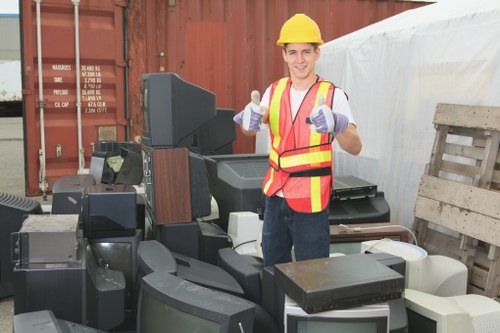
London generates a huge variety of recyclable waste every day. In residential areas, that can include paper, plastics, glass, metals, textiles, and bulky items that cannot simply go into a normal bin. In commercial settings, the volumes can be much larger and more frequent, especially in offices, shops, cafés, restaurants, warehouses, and managed buildings. Waste recycling in London helps residents and businesses handle these materials in a more organised and responsible way.
The benefit is not only environmental. Recycling also helps keep homes and workplaces functional. A cluttered basement, overfilled service yard, or storage room full of flattened boxes and mixed waste can slow down operations and create safety issues. For landlords and managing agents, regular recycling support can reduce complaints from tenants and improve the condition of shared spaces. For families and homeowners, it can free up valuable room in flats, lofts, garages, and sheds.
London’s building styles and transport patterns also shape how recycling has to be handled. A collection in a terraced street in Islington may require careful parking and quick loading. A commercial job in the City of London may need timed access to avoid peak congestion. A flat in Battersea or Stratford may involve stairs, lifts, concierge arrangements, or limited waiting space. That is why a local recycling team can add real value: the service can be planned around the realities of the area rather than forcing customers to work around a rigid process.
What Our London Waste Recycling Service Can Cover

Different customers need different types of recycling support, and the most useful service is one that can handle a wide range of materials. While every job should be assessed individually, many London customers ask for help with the following:
- Cardboard and packaging from retail deliveries, house moves, online stock, or office setups
- Paper and general office recyclables from workspaces, archives, and administration rooms
- Plastics and mixed recyclable packaging from shops, warehouses, and residential clear-outs
- Metals such as shelving, fixtures, and redundant equipment components
- Glass from hospitality and retail premises, where separation is important
- Textiles and soft furnishings where suitable recycling or recovery routes are available
- Wood and selected timber items from fit-outs, repairs, and refurbishments
- Office furniture including desks, chairs, filing cabinets, and storage units
- Bulky household recyclables from house clearances, moves, and decluttering projects
- Renovation-related recyclable materials that can be sorted from general waste
Some items may need separate handling depending on their condition, composition, or local disposal rules. For example, broken electronics, batteries, fluorescent tubes, and certain appliances often require special treatment rather than standard mixed recycling. A responsible local provider should explain what can be taken, what needs separate processing, and how to prepare materials in a safe and practical way.
Useful for households and businesses alike, recycling collections are often most valuable when they are tailored to the space you actually have. A small flat in Walthamstow, a managed office in Canary Wharf, and a café in Southwark all have different storage limits and different access points. The right team will plan around that from the start.
How Waste Recycling in London Typically Works
Step 1: Tell Us What Needs Recycling
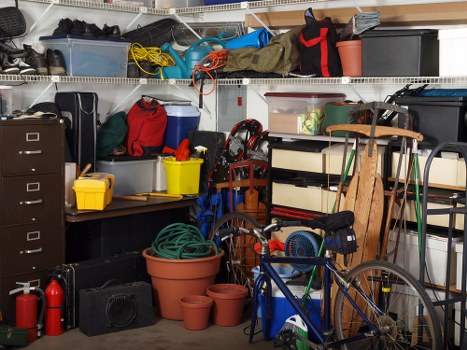
The first step is usually a quick description of the materials, amount, and location. Customers may be clearing a single room, a store room, a back office, or several floors in a larger property. The more detail you can provide, the easier it is to match the right collection approach. If you are unsure whether an item is recyclable, it is better to ask than to guess. A practical service will help clarify what is suitable for recycling and what may need a different route.
For local customers, it also helps to mention access details early. London collections often depend on whether there is a lift, whether the property is on a narrow street, whether parking is restricted, and whether items are located up stairs, in basements, or in a rear yard. These are the details that can make a booking smooth instead of stressful.
Step 2: Arrange a Suitable Time
Once the job is understood, a collection time can be arranged to fit your schedule. This matters in London because timing can affect access, loading, and traffic. A shop on Oxford Street, a studio in Shoreditch, or a family home in Wimbledon may each need different timing considerations. Commercial customers often want recycling handled early in the morning, between trading hours, or at a quieter point in the week. Residential customers may prefer a slot that avoids school runs, commuting, or building noise restrictions.
Good planning reduces disruption. When the arrival time is realistic and the collection plan is clear, the work can often be completed faster and with fewer interruptions.
Step 3: Sorting, Loading, and Recycling
On collection day, the team will usually load materials carefully, separating recyclable items where practical and keeping different waste streams organised. Depending on the service, this may include on-site sorting or loading pre-separated materials from your property. In both cases, the aim is to keep useful material in the recycling stream and avoid unnecessary landfill disposal.
For many customers, the value of a professional recycling collection is convenience. Instead of arranging multiple trips to a recycling centre, trying to hire a suitable vehicle, or carrying heavy items through busy streets, the service brings the process to your property. That is especially useful in inner London, where traffic, parking rules, and loading restrictions can make self-disposal time-consuming.
Local Recycling Challenges in London Properties
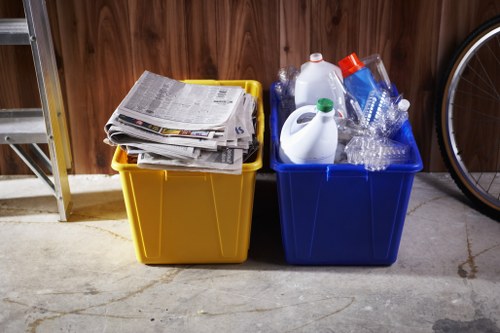
London properties often come with practical challenges that affect recycling more than people expect. A local company understands these challenges and plans accordingly. In older buildings, staircases can be tight and access routes can be awkward. In modern apartment blocks, collection may depend on concierge hours, lift size, or loading bay rules. In terraced homes and mews properties, there may be limited front garden space and narrow hallways. Even in commercial premises, bins and storage cages may be shared, locked, or located away from the main entrance.
Parking and access are two of the biggest issues. In parts of central and inner London, waiting space can be limited, traffic is heavy, and loading must happen quickly to avoid disruption. In residential streets, permits or restrictions may apply. In commercial districts, the timing of collections may need to fit around deliveries, customer traffic, or building management rules. A local recycling team is useful because it already expects these conditions and can factor them into the collection plan.
London also has a wide mix of property types, from converted flats and purpose-built blocks to office towers, retail units, workshops, schools, and hospitality venues. Each one needs a different approach to waste separation. A one-size-fits-all method is rarely efficient. Customers usually get better results when the service is designed around the building and the waste stream rather than the other way around.
Who Uses Waste Recycling Services in London?

Residential Customers
Homeowners, tenants, landlords, and letting agents often use recycling services when they have more material than standard council collections can handle or when items are too bulky to manage alone. This can include clearing a flat before a move, sorting out a loft or garage, disposing of packaging after a renovation, or removing old furniture that still contains recyclable components. In smaller London homes, especially flats and converted properties, storage space is precious. Recycling collections can help clear clutter without weeks of waiting.
Commercial Customers
Businesses often need recycling support on a repeat or scheduled basis. Offices produce paper, cardboard, and equipment packaging. Retail stores generate display material, packaging, and stock waste. Hospitality venues may need regular glass, cardboard, and mixed recyclables removed. Warehouses and industrial units can accumulate pallets, shrink wrap, metal fixtures, and packaging waste. For these customers, recycling is not just about disposal; it is part of keeping operations smooth, safe, and organised.
Property and Facilities Teams
Managing agents, site managers, and facilities teams frequently need a dependable way to clear recyclable waste from shared spaces, plant rooms, service yards, and refurbishment areas. In London, where buildings can have strict rules for contractors and delivery access, it helps to use a local team that can work to site requirements and complete the job with minimal disruption.
For every customer type, the goal is the same: keep recyclable material moving into the right stream, avoid unnecessary build-up, and make space usable again.
What Is Included in a Recycling Collection?
Typical Service Features
Every provider works differently, but a good local recycling collection normally includes a clear process from enquiry to completion. Customers usually want to know exactly what they are paying for and what will happen on the day. The following features are commonly expected:
- Collection of agreed recyclable materials from your property or site
- Loading assistance for items that are ready to go
- Separation of recyclable materials where appropriate
- Responsible transfer to suitable recycling or recovery facilities
- Clear communication about access, timing, and preparation
- Advice on items that require special handling
Optional support for more complex jobs
Some collections involve items stored in multiple rooms, upper floors, basements, or back areas. Others require coordination with building management, office teams, or contractors. In these cases, a service can often be adapted to the site so the work is still efficient. If materials need to be separated before collection, that can sometimes reduce handling time and make the job easier for everyone involved.
Transparency matters. Customers should feel comfortable asking what is accepted, how long the job may take, and whether there are any site limitations to consider before the team arrives.
Factors That Affect Pricing
What Usually Changes the Cost
People looking for waste recycling in London often want a quote that reflects the actual job rather than a generic estimate. Pricing is usually influenced by several practical factors, including:
- Volume of material – larger loads naturally require more labour, space, and transport capacity.
- Type of recyclable waste – some materials are simpler to process than others.
- Access conditions – stairs, lifts, restricted parking, or long carry distances can affect the time needed.
- Sorting requirements – pre-separated materials may be quicker to handle than mixed loads.
- Location – central, inner, and outer London jobs may differ because of travel time and parking conditions.
- Urgency and timing – same-day or out-of-hours work may require additional planning.
It is sensible to request a tailored quote based on your actual waste type and property access. That way, you can make a decision with a clear understanding of the service and avoid surprises on the day. A responsible provider will explain the main price factors before booking.
For business customers, especially those with regular recycling needs, it can also be helpful to discuss ongoing arrangements rather than dealing with collections one by one. That can make planning easier across the month or quarter.
Why Choose a Local London Recycling Company?
Built for the City’s Real Conditions
Choosing a local company matters because London is not a simple collection environment. A team that works across the city every day is more likely to understand restrictions, local traffic patterns, loading challenges, and property layouts. That practical knowledge can make the service faster and easier to manage.
A local provider is also more likely to respond flexibly when plans change. In a city where office moves, refurbishment schedules, and building access windows can shift quickly, flexibility is valuable. If the collection can be adjusted to suit your street, your building, or your trading hours, the whole process becomes less stressful.
Better Fit for Residential and Commercial Needs
Local teams are often better placed to help both households and businesses because they are used to handling a wide range of jobs in the same neighbourhood. One day may involve a one-bedroom flat in Southwark, the next a retail unit in Kensington, then a small office in Clerkenwell or a larger mixed-use site in Greenwich. That variety builds practical experience that helps on future collections.
Local knowledge is not just convenient; it is operationally useful. It helps with parking, timing, building access, and even knowing which types of premises are likely to need extra care on collection day.
How to Prepare for a Recycling Collection
Simple Preparation Checklist
You do not need to do everything yourself, but a little preparation can save time and make collection day smoother. Here is a simple checklist many London customers find helpful:
- Separate recyclable items from general rubbish where possible
- Flatten cardboard boxes to reduce space and speed up loading
- Keep similar materials together, such as paper, plastics, or metals
- Make sure items are accessible and not blocked by furniture or equipment
- Tell the team about stairs, lifts, narrow corridors, or parking rules
- Remove personal documents, confidential papers, and valuables in advance
- Let building management or reception know if needed
In busy London properties, preparation is often about access as much as sorting. If the collection point is in a basement, rear yard, service corridor, or upper-floor office, make sure the route is clear. If parking is limited, share any relevant instructions or restrictions in advance. Those small details can make a big difference to how quickly the job is completed.
If you are unsure how much to prepare, ask for advice before the booking. A good service should be able to tell you what is most useful and what can be left for the team to handle.
Areas Covered Across London
Serving Inner and Outer Boroughs
Waste recycling in London is often needed in every part of the city, from central locations to suburban neighbourhoods. Local customers may be in Westminster, Camden, Islington, Hackney, Tower Hamlets, Southwark, Lambeth, Kensington and Chelsea, Hammersmith and Fulham, Wandsworth, Brent, Ealing, Hounslow, Greenwich, Lewisham, Croydon, Barnet, Richmond, Merton, Newham, Redbridge, and many surrounding areas. The exact service area can vary, but the principle stays the same: support should be available where London homes and businesses actually need it.
Customers in different districts often face different access issues. In central boroughs, parking and loading restrictions can be the main challenge. In outer boroughs, larger properties and longer driveways may change the collection pattern. In mixed-use areas such as Stratford, Wembley, Whitechapel, or Battersea, a service may need to handle both residential and commercial recycling in the same block or street. That is why area knowledge matters.
When planning a collection, it helps to mention your borough and the type of property so the team can arrive prepared. Even within the same neighbourhood, access can vary greatly from one street to the next.
Frequently Asked Questions
Can you collect mixed recyclable waste?
Often, yes, but it depends on the materials involved. Some items can be handled together, while others need to be separated. If you have mixed loads, it is best to describe them clearly so the collection can be planned properly.
Do I need to sort everything before you arrive?
Not always. Some customers prefer to pre-sort, which can make the job faster. Others need help with mixed materials or bulkier items. The best approach depends on the waste type, the amount, and how much space you have to organise it beforehand.
Can recycling be collected from flats and upper floors?
Yes, provided the access details are clear and the items can be moved safely. Many London jobs involve stairs, lifts, or shared entrances. Let the team know in advance if there are any restrictions so the collection can be planned around them.
What happens to the waste after collection?
Recyclable materials are typically taken to appropriate facilities where they can be processed, separated, or recovered according to their material type. The aim is to divert suitable items away from landfill wherever possible and handle each material responsibly.
Can businesses book regular recycling support?
Yes. Many offices, retail units, and hospitality venues benefit from regular collections because their recyclable waste builds up quickly. A recurring arrangement can help keep stockrooms, back-of-house areas, and shared bins under control.
What if I am not sure whether an item is recyclable?
Ask before booking. Some items look recyclable but need special handling, and others may depend on their condition or material mix. A quick check at the enquiry stage can save time later.
Can you help with urgent collections?
In some cases, yes, depending on availability and the nature of the job. If you need a prompt collection, explain the situation clearly and ask whether a suitable time slot is available.
Practical customer tip
Always mention access, volume, and material type together. That gives the clearest picture and helps the service respond accurately.
When to Book Waste Recycling in London
Common situations that call for a collection
Many customers wait until waste becomes a problem before arranging recycling, but it is often better to book sooner. Common reasons include office clear-outs, end-of-tenancy clean-ups, retail stock changes, kitchen or shop refits, building work, probate clearances, garage decluttering, or simply the need to remove cardboard and packaging after a busy delivery period. Businesses may also book when storage areas are becoming unsafe or when refuse rooms are too full to manage easily.
There is also a strong case for booking before a deadline. If you are moving, handing over a commercial unit, preparing a property for sale, or coordinating contractors on site, having recycling removed in advance can make the next stage easier. In London, where timing and access are often tight, that planning can save a lot of pressure.
If you need a service that is practical, responsible, and local to the city’s needs, contact us today to discuss your collection. Whether your job is small, large, residential, or commercial, a tailored approach will usually be the easiest way forward.
Why Customers Value a Straightforward Recycling Service
People usually choose recycling support because they want less hassle, less clutter, and a clearer path to getting things done. That is especially true in London, where everyday logistics can be complicated enough without having to handle waste yourself. A good service saves time, reduces manual lifting, and removes the need to plan multiple trips to disposal sites.
Just as importantly, it gives customers confidence that recyclable materials are being dealt with properly. Whether you are a homeowner clearing a spare room or a business managing regular packaging waste, it feels better to know the job is being handled by a team that understands recycling streams and local conditions. That peace of mind matters.
For many people, the best service is the one that simply fits into the day with minimal disruption. That is the real goal of professional waste recycling in London: efficient collection, sensible planning, and a process that works for the city as it is.
Ready to Arrange Your Collection?
If you are dealing with a pile of recyclable waste and want it cleared properly, now is the right time to act. The sooner you arrange the service, the sooner you can reclaim space and keep your property or workplace running smoothly. From flats and family homes to offices, shops, and managed buildings, local recycling support can be adapted to many different situations across the city.
Request a free quote based on your materials, location, and access details. If you already know what needs to go, share the information and ask about the most suitable collection option. If you are not sure whether something can be recycled, speak up before booking so it can be checked in advance.
Book your service now if you are ready to move forward, or contact us today to discuss the details first. With the right local team, recycling in London becomes a simple, practical part of keeping your space in order.